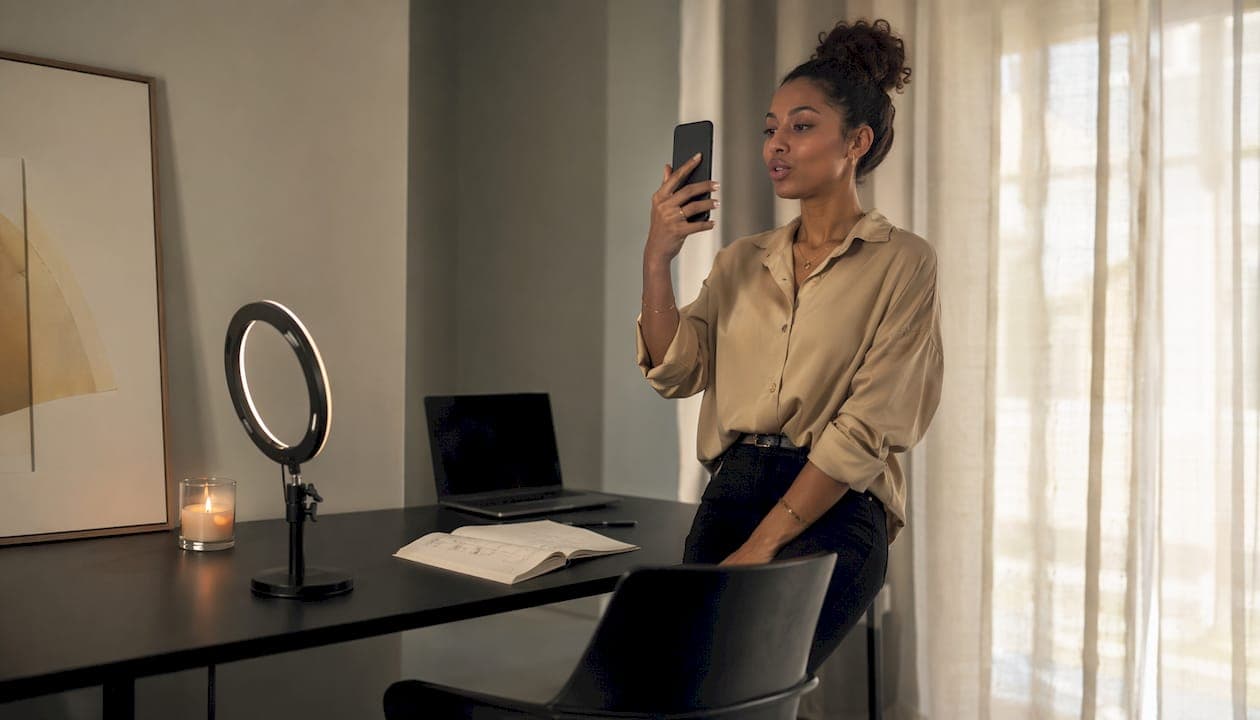
Effective TikTok video production for brands comes down to four things: correct vertical format, a hook that lands in the first second, pacing that earns every additional second of watch time, and a content system built to repeat. Brands that treat TikTok as a repurposing channel for TV spots consistently underperform. The platform has its own grammar, and the algorithm enforces it.
For brands running campaigns in 2026, the production fundamentals look like this:
- Shoot and export at 9:16, 1080x1920px, H264 codec
- Hook viewers within the first 1 second using visual, text, or audio triggers
- Target a video length between 21 and 34 seconds for optimal organic engagement
- Build 3–4 content pillars instead of chasing individual trends
- Work with verified UGC creators or influencers for authentic delivery
- Prioritize saves and rewatches over likes when measuring content quality
What TikTok video production specs actually matter in 2026
TikTok's format requirements are non-negotiable for reach. The platform is vertical-first: 9:16 at 1080x1920px fills the full screen, while square and horizontal formats display with black bars and receive less algorithmic preference. Shooting anything other than vertical is a reach penalty before the content even plays.
| Setting | Recommended value |
|---|---|
| Aspect ratio | 9:16 vertical |
| Resolution | 1080x1920px |
| Codec | H264 codec |
| Frame rate | 30fps (60fps for motion-heavy content) |
| File format | MP4 or MOV |
| Max file size (mobile) | platform-defined limits |
Videos between 21 and 34 seconds hit the organic engagement sweet spot. The algorithm favors completion rate, and shorter clips are far easier to watch all the way through. Longer formats work for tutorials, but new brand accounts especially benefit from clips between 21 and 34 seconds while the algorithm learns their audience.
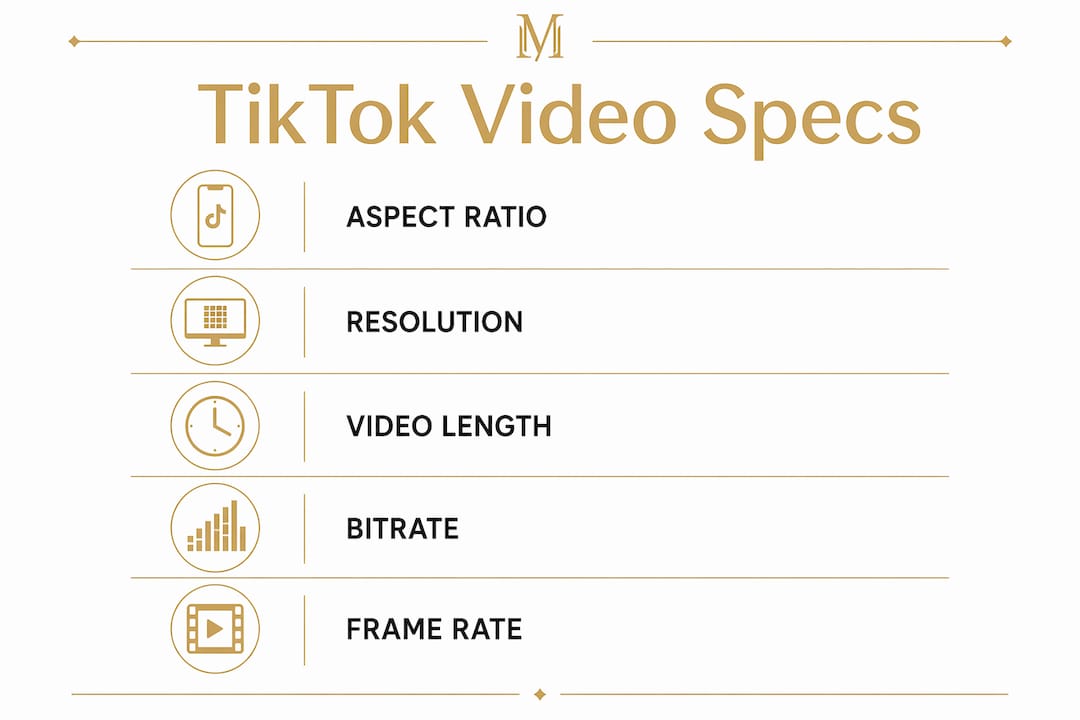
Pro Tip: Upload at 4–8 Mbps bitrate before TikTok re-encodes your file. The platform compresses everything on delivery, so giving it a higher-quality source file produces noticeably sharper output on high-resolution phones.
How to build a creative content strategy for TikTok marketing
The first second of any TikTok determines whether a viewer stays or swipes. The swipe gesture takes roughly 400 milliseconds, which means a static logo intro or slow zoom costs reach before the content registers. Strong hooks come in three layers, and the best-performing brand videos use all three simultaneously.
- Visual hook: Start mid-motion, show the result before the setup, or use an unexpected visual element in frame one
- Text hook: An on-screen claim that contradicts an assumption or promises a specific payoff
- Audio hook: The first spoken sentence should raise a question or state something counterintuitive
Viral TikTok success comes from repeatable content systems, not trend-chasing. Build 3–4 content pillars tied to your brand's expertise and your audience's actual interests. A consumer brand might use product demos, behind-the-scenes content, customer reactions, and educational tips. A B2B company might rotate between industry insights, team culture, and case study moments. Pillars give you a production calendar that doesn't require reinventing the concept every week.
Pacing matters as much as the hook. Think of each video as a sequence of micro-promises: every 2–3 seconds, the viewer should want the next piece. Cut anything that doesn't move toward the payoff.
Pro Tip: Avoid the "press release with a soundtrack" trap. Brand content that leads with company history or product specs before earning viewer attention loses people in the first three seconds. Lead with the viewer's problem or a surprising result, then bring in the brand.
Content that earns saves performs better over time. When viewers save a video, TikTok reads it as strong intent to return, which signals content quality and boosts distribution. Tutorial formats, step-by-step lists, and reference content save well. Pure promotional content rarely does.
A production workflow that delivers quality without a big budget
Professional TikTok content doesn't require a studio. Clarity, good audio, and correct framing outperform expensive gear on a platform where authenticity reads better than polish. Here's a workflow that scales for brand teams:
- Plan one clear idea per video. Write a two-sentence hook before you pick up a phone.
- Set up your shot vertically. Use a compact tripod, position your subject in the center of the frame, and keep key text away from the bottom-right corner where TikTok's interface overlaps.
- Light from the front. Natural window light facing the subject is free and flattering. A basic ring light handles evening shoots.
- Record clean audio. A lavalier mic eliminates room noise. If you're on a phone without one, record in a quiet space and stay close to the microphone.
- Film in short takes. Shoot each segment separately so editing is faster and you can rearrange without reshooting.
- Edit in CapCut or Adobe Express. Cut silence first, place the hook at the very start, add burned-in captions, and keep transitions simple.
- Batch your content. Shoot 8–12 videos in a single session. This keeps your setup consistent and gives you enough material to test variations on hooks and lengths.
Looping your video is one of the highest-leverage techniques available. Structure the last frame to transition back to the first, and TikTok counts each loop as additional watch time. A 15-second video that loops three times generates 45 seconds of watch-time signal, which the algorithm treats more favorably than a 45-second video watched once.
- Use CapCut's loop cut feature or manually match your closing frame to your opening visual
- Test variations: same concept, different hook, different first frame
- Track 2-second retention and completion rate as your primary editing feedback signals
How to hire an influencer marketing agency for TikTok campaigns
Working with a specialized agency gives brands access to verified talent, tested content formats, and production infrastructure that would take months to build internally. The right agency shortens the gap between campaign brief and live content.
When evaluating agencies, look for:
- Verified talent rosters with real engagement history, not just follower counts
- Campaign specialization in TikTok and short-form vertical content specifically
- Flexible pricing with per-project and subscription options, so you're not locked into a retainer before you've tested the relationship
- Track record with recognizable brands as a signal of production standards
- UGC creator options alongside traditional influencer placements, since UGC content often outperforms polished branded video on TikTok
Brief your agency with specificity. Share your content pillars, your target audience demographics, the hook style you want tested, and the metrics you're optimizing for (saves, profile visits, conversions). Vague briefs produce generic content.
The brands that win on TikTok treat their agency partners as creative collaborators, not vendors. Share your analytics, flag what's working, and iterate together. The feedback loop between real performance data and the next production batch is where campaigns compound.
Packages from agencies like Influencemodels start at $200, with monthly subscriptions available for brands that need consistent volume. That pricing structure makes it possible to test before committing to a full campaign budget.
Sound and music rules every brand needs to know
TikTok's algorithm uses audio as a discovery signal. When a track trends, every video using it surfaces into the same audio feed, which is one of the strongest organic-reach levers on the platform. The catch for brand accounts: most trending sounds are not cleared for commercial use.
TikTok's Commercial Music Library offers sounds licensed for business accounts, but the catalog is smaller than the general library. Using a non-commercial track on a brand account risks content removal and account flags. Always source music through the Commercial Music Library or use original audio. Original audio also builds its own discovery channel: when your branded sound gains traction, other creators using it pull your brand into their content's reach.
Trending sounds work best when they match your content's tone. An off-niche trending sound pulls your video into the For You feeds of viewers who have no interest in your brand, which produces views without follower conversion.
Lighting and shooting techniques for vertical mobile video
Mobile vertical video has specific lighting constraints that differ from horizontal production. The subject needs to fill the frame without dead space above or below, and the light source needs to be in front of the subject, not behind.
Window light facing the subject is the most reliable free option. A ring light placed at eye level works for talking-head content. Avoid overhead lighting, which creates harsh shadows under the eyes and chin. For product shots, a small softbox or two-point lighting setup gives you control without the cost of a full studio rig.
Stability matters more than most brands expect. Even slight camera shake reads as low quality on a phone screen. A compact tripod or phone mount eliminates the problem entirely. For handheld shots, keep movement intentional: a slow push toward the subject reads as energy; random drift reads as amateur.
Shoot at 60fps for any content with fast movement, product demos, or physical action. For talking-head or static content, 30fps is sufficient and keeps file sizes manageable.
Copyright and content rights on TikTok
Copyright on TikTok operates the same way it does on every other platform: using someone else's music, footage, or creative work without a license is an infringement, regardless of how common the practice looks. For brand accounts, the stakes are higher because commercial use triggers stricter enforcement.
Key rules for brand content:
- Use only sounds from TikTok's Commercial Music Library or original audio you own
- If you work with UGC creators, get written content rights agreements before repurposing their videos in paid ads
- TikTok's Branded Content Policy requires disclosure when content is paid or incentivized. Use the Branded Content toggle in the posting settings
- For influencer campaigns, ensure your contracts specify usage rights, exclusivity windows, and platform permissions
Repurposing influencer content for paid TikTok ads without a usage rights agreement is one of the most common and costly legal mistakes brands make. Address it in the brief, not after the content goes live.
Measuring TikTok video campaign performance
TikTok's 2026 algorithm ranks engagement signals in this order: rewatch and loop rate first, then completion rate, shares, meaningful comments, and saves. Likes carry the least weight of any engagement type. That ranking should directly shape what you optimize for in production.
The metrics that actually tell you something:
| Metric | What it reveals |
|---|---|
| 2-second retention | Did the first frame stop the scroll? |
| Completion rate | Was the video tight enough to finish? |
| Rewatch rate | Did the content have replay value or a loop? |
| Save rate | Was the content worth revisiting? |
| Shares to DMs | Did viewers want to send it to someone specific? |
| Profile visits | Did the video earn curiosity about the brand? |
Track these per video and per content pillar. When one pillar consistently outperforms, produce more variations of it before expanding to new formats. Scaling what's already working beats testing new concepts at volume.
Influencemodels connects brands with verified TikTok talent
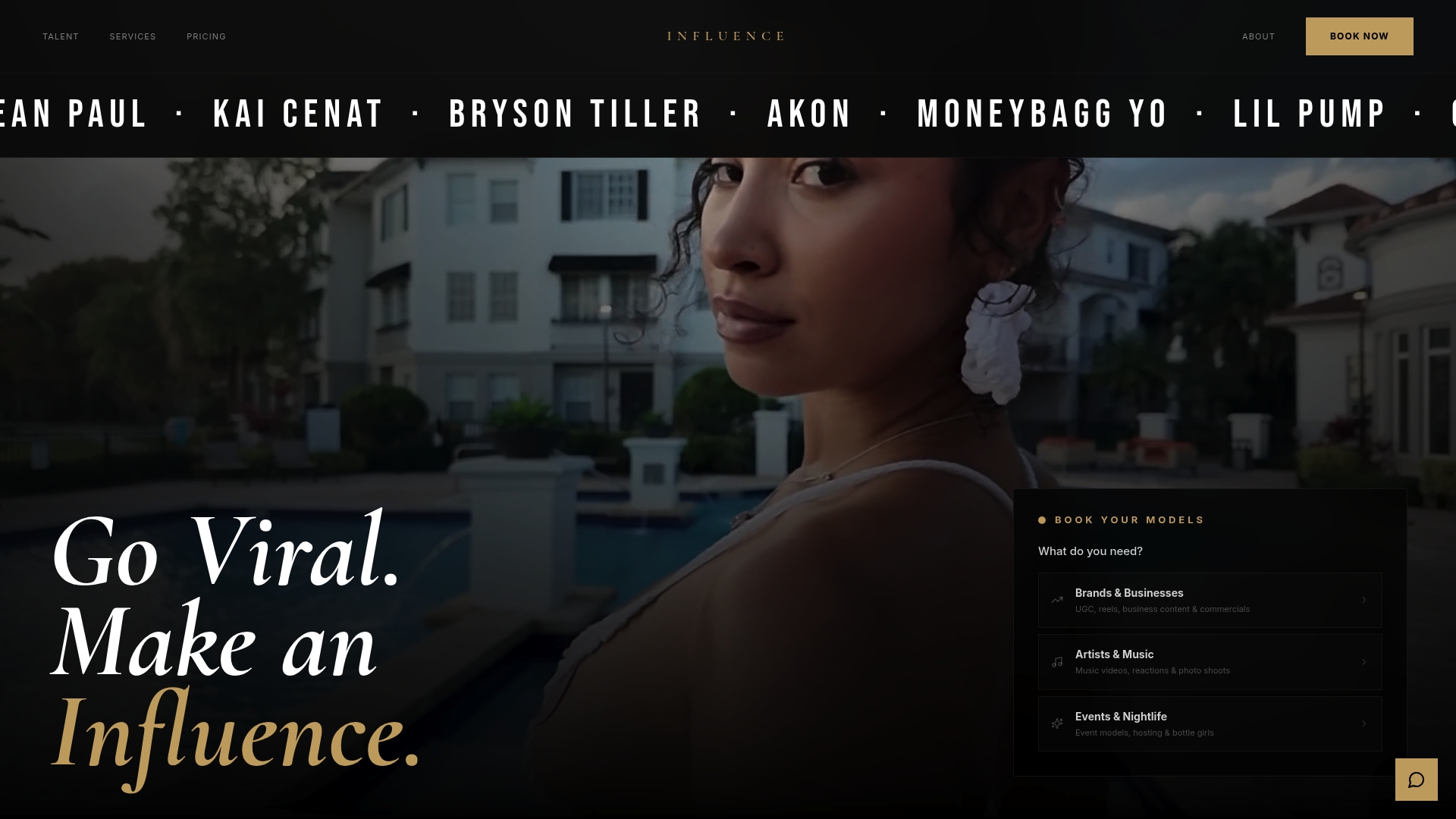
Brands that need TikTok content at volume face a real production problem: building an internal creator network takes time most marketing teams don't have. Influencemodels solves that directly. The agency connects brands, artists, and businesses with verified influencers and UGC creators who produce TikTok and Instagram Reels content that actually fits the platform, not repurposed broadcast material.
The roster includes talent featured in Forbes, Fenty Beauty, SavageXFenty, and Meta Ray-Ban, with music video credits alongside Sean Paul, Bryson Tiller, DaBaby, Akon, and Kai Cenat. Packages start at $200, with monthly subscriptions for brands that need consistent content output. In-person shoots are available across South Florida, and remote content delivery is available nationwide.
For brands ready to move from strategy to production, browse verified talent at Influencemodels and book directly online.
Key Takeaways
Effective TikTok video production for brands requires vertical 9:16 formatting, a sub-one-second hook, and a repeatable content system built around 3–4 audience-focused pillars.
| Point | Details |
|---|---|
| Format is non-negotiable | Shoot and export at 9:16, 1080x1920px, H264 codec to avoid algorithmic penalties. |
| Optimal video length | Target 21–34 seconds for organic engagement; longer durations require very tight pacing to hold attention. |
| Hook in the first second | Layer visual, text, and audio hooks simultaneously to stop the scroll before 400ms. |
| Saves and rewatches signal quality | TikTok weights rewatch rate and saves above likes; optimize content for both. |
| Influencemodels for verified talent | Packages from $200 connect brands with UGC creators and influencers for TikTok campaigns. |