
Ecommerce influencer marketing delivers strong returns on investment, with some campaigns earning significantly higher multiples per dollar spent. The channel has grown substantially and is expected to continue increasing in value in coming years. That growth is not accidental. The underlying model has changed: influencer marketing has shifted from a brand awareness play into a fully measurable performance channel, where creators function as a trackable media mix with revenue accountability.
The brands winning right now are not chasing follower counts. They are building structured programs around creator affiliates, closed-loop commerce on TikTok Shop and Instagram Shopping, and performance-based compensation that ties creator earnings to actual sales. Platforms like MikMak and BigCommerce have made attribution and storefront integration accessible to brands at every scale.
Key mechanisms driving ecommerce sales through creator partnerships:
- Closed-loop attribution: TikTok Shop and Instagram Shopping connect content directly to checkout, eliminating the guesswork that plagued traditional creator campaigns
- Performance compensation: Affiliate commissions and hybrid pay models align creator incentives with brand outcomes
- Tiered creator architecture: Nano, micro, and mid-tier creators each serve a distinct function across the funnel
- AI-powered discovery: 59% of marketers now use AI tools for creator vetting, discovery, and performance reporting
- Content amplification: Creator content used in paid ads outperforms brand-created ads by 2–3x in conversion rate across ecommerce sectors.
What types of influencer marketing opportunities can ecommerce brands use?
Ecommerce brands have more formats to work with than most realize, and the right mix depends on your product category, budget, and where your customers spend time.
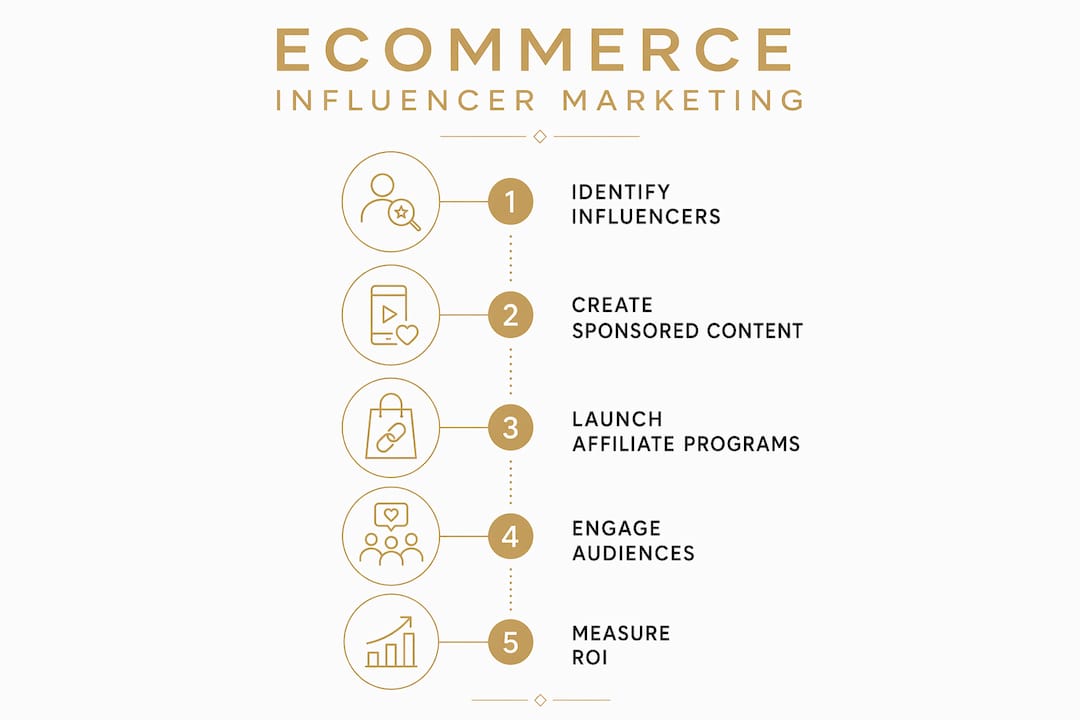
Sponsored content is the most common entry point. A creator publishes a post, Reel, or Story featuring your product, with FTC-required disclosure using #ad or #sponsored clearly visible, not buried in hashtags. You control the brief; the creator controls the voice. That balance is what makes sponsored content feel native rather than like a banner ad.
Affiliate links and discount codes shift the model to pure performance. You pay only when a creator drives a sale, using unique tracking links or codes like "SOPHIE15" to attribute revenue even when customers return days later. Creator affiliate commissions typically run 10–25% of sales, with TikTok Shop and Instagram Shopping enable automated native attribution features at the platform level..
Contests and giveaways generate fast engagement and audience growth. They work best when the entry mechanic drives a specific action, following your account, tagging a friend, or visiting a product page. The risk is attracting prize-seekers rather than genuine buyers, so pair giveaways with a follow-up email or retargeting sequence.
Brand ambassador programs are the long game. Ambassadors represent your brand across multiple touchpoints over months or years, building the kind of repeated endorsement signal that platform algorithms increasingly reward. They are the face of your brand, not just a one-off post.
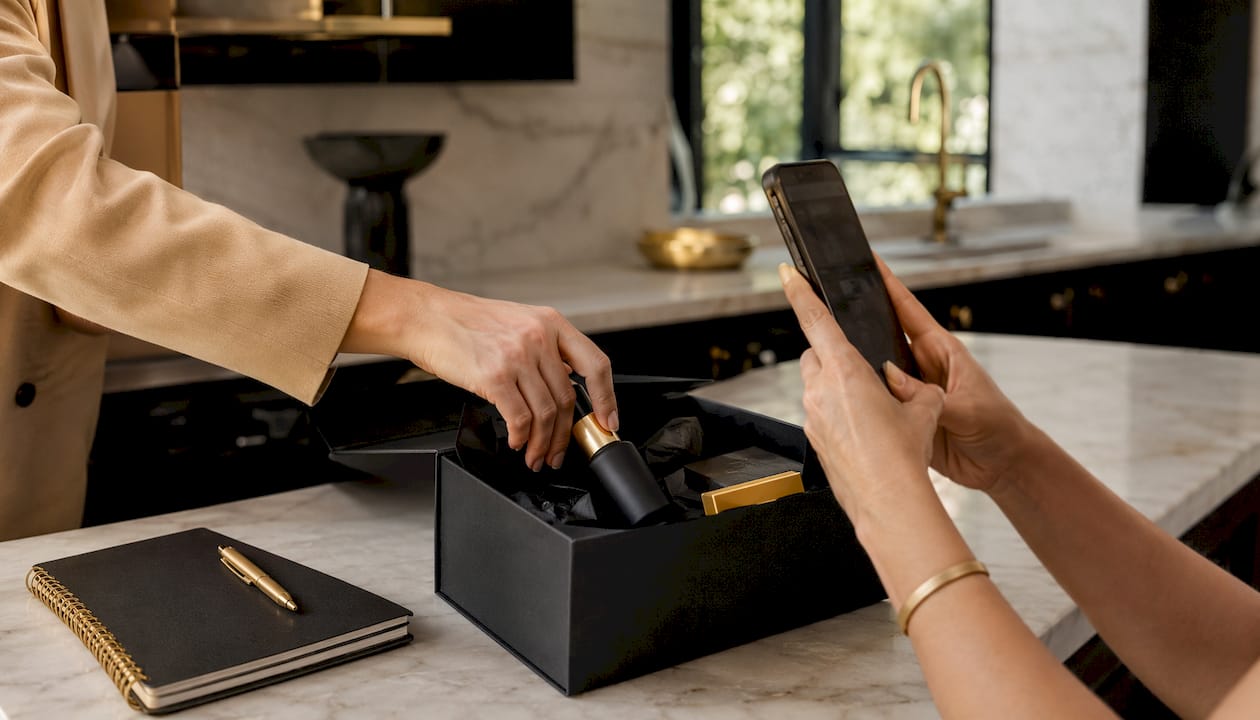
Product seeding and UGC generation involve sending products to creators with no strings attached. The goal is organic content and relationship-building, not a guaranteed post. Seeding done well turns loyal customers and niche creators into a pipeline of authentic content that can be licensed for paid ads, email, and your product pages.
Platform-specific commerce integrations deserve their own attention. TikTok Shop lets creators tag products directly in videos and livestreams, with purchase happening inside the app. Instagram Shopping works similarly for visual product categories. Both platforms have made the path from discovery to checkout shorter than any previous format.
Why is influencer marketing growing so fast for online stores?
The short answer: consumer trust has shifted, and the numbers reflect it.
Traditional digital ads face rising costs and declining effectiveness. Influencer marketing for online stores fills that gap because creators have built genuine relationships with their audiences. A recommendation from a trusted creator carries weight that a display ad simply cannot replicate. Influencer marketing has structurally evolved from a brand awareness play into a measurable performance channel, with creators acting as a trackable component of the media mix.
The ROI case is now concrete. Brands average $5.78 per $1 spent, and many marketers are increasing their influencer budgets in 2026. That is not a trend driven by hype. It is driven by attribution infrastructure that finally makes the channel provable.
| Marketing channel | Average ROI per $1 spent | Attribution clarity | Content reuse potential |
|---|---|---|---|
| Influencer marketing | $5.78 | High with closed-loop platforms | High (UGC, paid ads, email) |
| Paid social (Meta) | Varies by category | Moderate (pixel-based) | Low |
| Email marketing | High for existing lists | High | Moderate |
| Display advertising | Low | Low | None |
Beyond ROI, the benefits stack up in ways that compound over time. Authentic UGC from creators reduces in-house content production costs. Influencer collaborations generate backlinks and organic traffic that lift SEO. And creator content, once produced, can be repurposed across paid ads, email flows, and product pages, delivering value long after the original post.
Pro Tip: Platform algorithm shifts on TikTok and Instagram now heavily reward repeated, authentic creator endorsement signals over paid placement. Brands that run always-on programs, rather than one-off campaigns, benefit from this compounding effect.
How do ecommerce brands use influencer marketing to scale?
The brands scaling effectively in 2026 have moved past the campaign model. They run programs.

A campaign ends. A program compounds. DTC brands running structured, always-on influencer programs tend to achieve lower blended customer acquisition costs compared to those relying on episodic campaign bursts. That gap has widened as algorithms on Meta and TikTok increasingly reward consistent creator endorsement over paid placement.
The architecture that works looks like this:
- Anchor tier (mid-tier creators, 100K–1M followers): Deep brand access, product equity, and exclusivity clauses in your category. These creators build brand credibility and drive significant volume.
- Micro tier (10K–100K followers): Affiliate-linked evergreen content. Micro-influencers capture a significant portion of influencer marketing budgets and typically deliver higher engagement on Instagram compared to macro creators.
- Nano tier and loyal customers: UGC at scale. High-volume seeding with low-friction gifting generates a large pool of willing creators, many of whom mature into long-term brand partners with affiliate incentives.
Compensation models have evolved too. Flat-fee-only deals are losing ground to hybrid structures that combine a base creative fee, a performance bonus tied to tracked revenue, and a product allowance that keeps creators genuinely using the product between paid posts. This alignment of creator incentives with brand outcomes consistently produces more authentic content than a transactional brief.
Measurement is where most brands still leave money on the table. Last-click attribution undercounts influencer-driven revenue because much of the impact flows through dark social, saved posts, and delayed purchase decisions. A complete attribution stack uses UTM links and discount codes as the floor, post-purchase surveys (tools like KnoCommerce or Fairing capture dark social attribution), brand search lift tracked via Google Search Console, and cohort LTV analysis to understand whether influencer-acquired customers retain better than paid social customers.
Pro Tip: Before committing to a quarterly contract, run a $500–$1,500 test post with a unique discount code or affiliate link. Real conversion data from a single post is worth more than any engagement metric you can pull from a creator's media kit.
Real ecommerce influencer marketing success stories worth studying
The clearest proof of what this channel can do comes from creators and brands who have built repeatable systems, not viral flukes.
Brandon Hans, TikTok Shop's second-highest independent creator by all-time gross merchandise value, has generated more than $23 million in sales through his BELUSH-branded account. His following sits at roughly 262,000, a number he rarely mentions. What he talks about instead is the stop-scroll moment. "Before you can even sell anyone anything, you have to get them to stop," he says. "If I don't get anyone to stop, then TikTok's algorithm doesn't reward me with more views." One faceless voiceover video, six months in the making, generated over $1 million in sales for a single vacuum product.
His partnership with SharkNinja illustrates what happens when creator and brand align on inventory, ad spend, and communication. He helped drive $100 million in sales for the brand in their first year on TikTok Shop, during a period when SharkNinja had no dedicated inventory allocation for the platform.
The MonkeyFeet case study from influencer seeding shows a different scale but the same logic. After seeding 166 influencers, 113 posted, generating 375 separate posts and stories. The paid campaigns built on that organic content delivered a 4.4 ROAS, and the brand crossed $1 million in revenue within four months.
What the strongest campaigns share:
- A clear stop-scroll hook that earns the first three seconds of attention
- Product demonstrations that answer real objections, not scripted talking points
- Affiliate or discount code tracking that attributes revenue accurately
- Creative diversity across formats, so one failing style does not sink the program
- Inventory and fulfillment capacity to sustain demand when a video goes wide
What Influencemodels sees in U.S. ecommerce influencer campaigns
The structural shift in influencer marketing is visible in how brands approach creator selection and compensation. The old model, find a large following, pay a flat fee, hope for sales, has been replaced by programs built around revenue accountability.
Brands that treat creators as long-term partners rather than media placements consistently outperform those running transactional campaigns. The difference shows up in content quality, algorithm performance, and customer lifetime value. Creators who genuinely use a product and have real input into how it is presented produce content that converts at a fundamentally different rate than those executing a brief for a flat fee. The 2026 ecommerce environment rewards authenticity not because it is a nice idea, but because platform algorithms and consumer instincts have both become sophisticated enough to detect the difference.
Influencemodels, founded by Eden Roy and Deseray Marie and based in Miami and Boca Raton, works with verified influencers whose credentials span Forbes features, Fenty Beauty, SavageXFenty, and Meta Ray-Ban campaigns. The agency's roster includes talent with music video credits alongside Sean Paul, Bryson Tiller, DaBaby, Akon, and Kai Cenat. That breadth of verified, high-profile talent is what separates a structured agency program from a brand running outreach through spreadsheets.
Platform selection matters as much as creator selection. TikTok delivers 5.3% engagement rates versus Instagram's 1.9%, making it the highest-ROI platform for performance-focused ecommerce brands. YouTube earns budget for considered purchases where product education matters. Pinterest drives high-intent discovery, particularly in wellness, fashion, and home categories. Instagram remains the default for visual product categories and aspirational positioning. Matching your product category to the right platform is not optional; it is where campaigns succeed or fail before a single creator is briefed.
Key Takeaways
Ecommerce influencer marketing drives the strongest returns when brands shift from one-off campaigns to always-on programs built around tiered creator architecture, performance-based compensation, and closed-loop attribution.
| Point | Details |
|---|---|
| Always-on programs cut costs | DTC brands with structured influencer programs report lower customer acquisition costs than episodic campaigns. |
| Micro-influencers lead performance | Micro-influencers typically deliver higher engagement on Instagram compared to macro creators. |
| Platform choice determines ROI | TikTok has notably higher engagement rates compared to Instagram, making platform selection a critical campaign consideration. |
| Attribution requires multiple signals | Last-click tracking undercounts influencer revenue; post-purchase surveys and brand search lift capture the full picture. |
| Influencemodels connects brands to verified talent | Packages start at $200, with verified creators featured in Forbes, Fenty Beauty, and Meta Ray-Ban campaigns. |
The case for creator relationships over creator transactions
The conventional wisdom in influencer marketing is to find creators with the right audience demographics and pay for posts. That framing misses the most important variable: how the creator actually feels about the product.
Creators who feel like vendors produce vendor-quality content. Platform algorithms on TikTok and Instagram are sophisticated enough to detect transactional content and de-prioritize it. Consumers have developed the same instinct. A creator who genuinely uses a product, has real input into the brief, and earns a share of the revenue they generate will produce content that looks, sounds, and converts differently than one executing a deliverable for a flat fee.
The brands that have figured this out treat influencer relationships the way a good sales organization treats its best reps: with real compensation tied to results, genuine product access, and enough creative freedom to let the creator's voice come through. That means hybrid compensation structures, product allowances, and in some cases, exclusivity premiums that compensate creators fairly for not working with your direct competitors.
The common pitfall is optimizing for cost per post rather than cost per acquisition. A cheaper creator who drives no conversions costs more than an expensive one who moves product consistently. The metric that matters is revenue per creator, tracked over time, not the rate on a single brief.
One more thing brands consistently underestimate: the value of the content itself beyond the original post. Creator content used in paid ads outperforms brand-created ads by 2–3x in conversion rate. Every piece of creator content is a potential ad creative, email asset, and product page element. Brands that license content rights upfront and build a library of creator assets compound the value of every dollar spent on the channel.
Influencemodels gives ecommerce brands a faster path to verified creator talent
Most ecommerce brands spend weeks on creator outreach, vetting, and negotiation before a single piece of content gets made. Influencemodels cuts that process down to a direct booking.
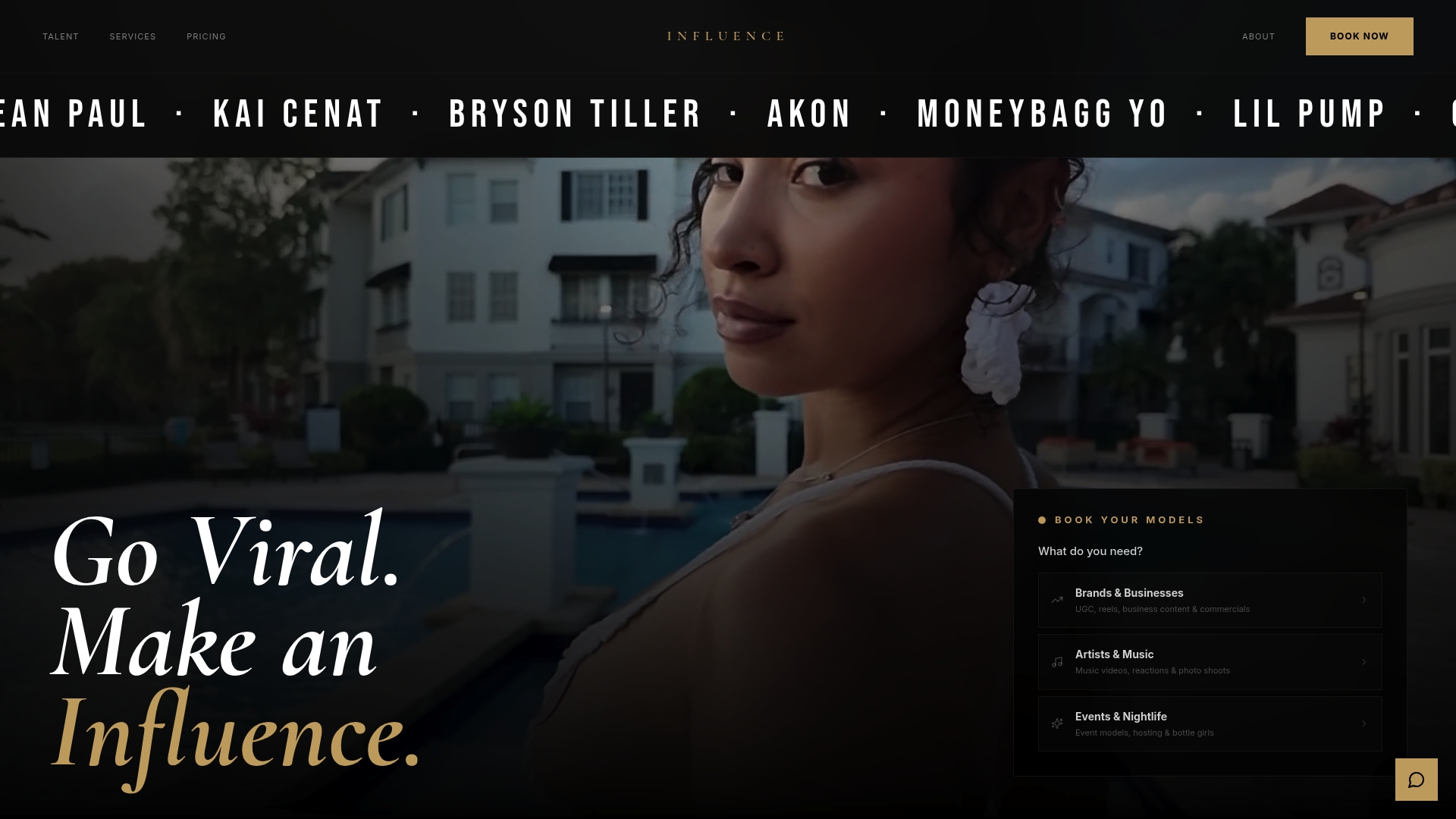
The agency's verified roster includes influencers and models with documented placements in Forbes, Fenty Beauty, SavageXFenty, and Meta Ray-Ban campaigns, plus music video credits alongside artists including Sean Paul, Bryson Tiller, DaBaby, Akon, and Kai Cenat. For ecommerce brands, that means access to creators with real, proven audiences rather than inflated follower counts. Services cover UGC content creation, TikTok and Instagram Reels, brand ambassador programs, product shoots, and remote content delivered nationwide. In-person shoots are available in South Florida.
Packages start at $200, with monthly subscriptions available for brands running ongoing programs. There is no agency retainer requirement to get started. Browse the verified talent marketplace or visit the Miami influencer marketing page to explore service packages and book directly online.